Monday, June 29, 2020

Searching for a Stourton connection…

Searching for a Stourton Connection_Shersca Genealogy_Stourton Church
Stourton Church, Wiltshire: The resting place
of members of the Stourton family.

Today’s post is one I have been planning for a little while now, but have only now got around to writing. A few weeks ago, I mentioned an online resource in one of my posts relating to the coronavirus pandemic. This resource was the History of Parliament Online. Today I will be going into more detail about the site and how it has helped me in my own research for an elusive link to a Medieval Somerset family.


Most of my ancestors, in whatever county, seem to have been fairly ordinary. Where occupations are recorded, they were generally agricultural labourers. If you think about how rural Somerset and the other South-Western counties are in comparison to others, then that kind of makes sense. The further back in time you travel, the number of people that are recorded, gets smaller. As you travel before the introduction of parish baptisms, marriages and burials in 1538 (at the earliest), the percentage of the population being record becomes more limited. Generally speaking, you will only find those who held land of some sort. Manorial records may give details of people lower down the social ladder- more on those another time.

History of Parliament Online

There are many resources which can tell you more about your ‘landed’ ancestors, but one that I found particularly interesting recently was History of Parliament Online. I mentioned in my previous post that it includes biographical details about Members of Parliament, but it does much more than that. It is an online extension of a research project called The History of Parliament. It is funded largely by the Houses of Parliament and employs a team of historians to research the history of parliamentary politics in England and later, Britain.

Some volumes have already been published and the first one covers the years 1386-1421. The project is not yet complete and there is still more research to be done for much of 15th, 17th and 19th centuries. You can find more detail about the project and the years already covered in the ‘About’ section of the website. The good thing is that the years already in print can be found on the website. The website is easy enough to search for a particular person, constituency or parliament and each article is fully referenced. This is of course, very important to us genealogists, as well as to historians. It means that the articles on the website have a higher degree of credibility and you can then go and look at the documents used yourself.

Useful biographies

So how has History of Parliament Online helped me? Well, I have been tracing back a line which originated with the Symons family (my Somerset brickyard managers). Travelling further back took them through a mixture of male and female lines (Saunders, then Siddenham/Sydenham) to Stourton. I am still trying to confirm the connection (if there is one) between the Sydenhams of Lydeard St. Lawrence (Somerset) and the Stourton family who were land holders in the county and played a part in county and country politics too.

In my quest to find out more information about the Stourtons (in the hope it would lead me to a link), I came upon some biographies about some of the male members of the family on History of Parliament Online. They were all from the earliest group of records (1386-1421). There may well be more to find in the future as the rest of the 15th century is still being researched.

John Stourton of Preston Plucknett

Searching for a Stourton Connection_Shersca Genealogy_Preston Plucknett
What used to be the site of Preston Plucknett
Manor- a familiar place to John Stourton.

The first Stourton found was John Stourton of Preston Plucknett, who died in 1438.1 His entry on History of Parliament Online first gives the constituency he served as a Member of Parliament and the dates: Somerset, between 1419-1421, 1423, 1426, 1429 and 1435. It then gives an account of his family and education, the offices he held and then a detailed biography, followed by notes and references. The most important details for my family history are firstly the relationship details. The article tells me that he was the younger son of John Stourton of Stourton in Wiltshire and his mother was Alice, his father’s second wife. It also tells me that he was the half brother of William Stourton (the subject of another of the articles found). The names of John’s three wives are recorded and where known, their parentage, vital dates and possible marriage dates.

John’s biography section gives a lot more detail about his life. It seems he was a lawyer, working mostly with his half-brother William. Details are recorded about his work for Royal Commissions and the family’s relationship to the church. The wonderful thing about the article, is that it does not just talk about John, but his siblings, the marriages of his daughters and the subsequent marriages of his wife after John’s death. This helps to connect female ancestral lines, which are more difficult to research the further back in time that you go; male ancestors appeared in records a great deal more.

The details that can be filled in about John’s life are brilliant for any genealogist and give a sense of the man that you might not get for other ancestors of the same period. An entry like this is only as good as the sources available though. If a landed ancestor did not do anything of note, then they may not have been recorded in the same variety of records as John Stourton. Sometimes, an ancestor is only as important as the status of their family. As John’s biography notes, it seems that the Stourton family were held in some regard already by the time that John came along. I have come across various articles and histories about the family.

Is it worth it?

For the biographies of William Stourton (John’s brother)2 and his son (also named John),3 the level of detail is similar. Familial relationships are given, details of occupations, land and contents of wills can also be seen. It makes the website well worth looking at if you have a landed ancestor. If there is a possibility that he (and in this time-period, men are certainly more likely) was an MP, then he might appear on the website. Even if you don’t know whether he was an MP or not, I think it is still worth checking History of Parliament online. It is a very small undertaking for a potentially large reward.

Unfortunately for me, I am still searching and trying to verify my connection to the Stourton family. My problem area lies just outside of the years available on History of Parliament Online. Time to look at other records and resources!

References:

  1. Roskell, J. S., Clark, L. and Rawcliffe, C., eds. (1993) ‘STOURTON, John I (d.1438), of Preston Plucknett, Som.’ in The History of Parliament: the House of Commons 1386-1421. Martlesham: Boydell and Brewer. https://www.historyofparliamentonline.org/volume/1386-1421/member/stourton-john-i-1438#footnoteref1_k8tsh2i : accessed 10 June 2019.
  2. Roskell, J. S. and Kightly, Charles. (1993) ‘STOURTON, William (d.1413), of Stourton, Wilts.’ in The History of Parliament: the House of Commons 1386-1421. Martlesham: Boydell and Brewer. https://www.historyofparliamentonline.org/volume/1386-1421/member/stourton-william-1413 : accessed 10 June 2019.
  3. Richmond and Woodger, L. S. (1993) ‘STOURTON, John II (1400-1462), of Stourton, Wilts.’ in The History of Parliament: the House of Commons 1386-1421. Martlesham: Boydell and Brewer. https://www.historyofparliamentonline.org/volume/1386-1421/member/stourton-john-ii-1400-62 : accessed 10 June 2019.


Copyright © 2020 Shersca Genealogy

Monday, June 15, 2020

Their surname was what?!

Have you ever come across a surname in the course of your family history research which made you look twice? The kind of surname that belongs in a comedy sketch? Many people throughout history have changed their names. Perhaps because their name isn’t interesting enough, perhaps because their work wouldn’t be considered if they used their real name. Reg Dwight, the Brontë sisters and even J.K. Rowling are all examples. But, sometimes names are changed accidentally. Maybe a person’s handwriting was not very clear, or maybe modern sensibilities and experiences correct the name instead. Well, I have found seven generations of one particular surname in my family that has fallen victim to just such an unwitting change.

An 'interesting' name

As I have written before, many of my ancestors come from Somerset in England (see my other blog post on the subject). I have ancestors in the county on both my maternal and paternal side. A little while ago, I inherited some research from a relative for some Somerset ancestors on my maternal side. It has taken a little while to sort through it all, but recently I have been looking further at the Toogood family. They came from the Burnham, Huntspill and Wedmore area of Somerset (not far from Bridgwater). There were some notable members of the family from the Victorian period, namely local brickwork owners and managers. Their story would need a whole other post!

But this story begins in Wedmore with the marriage of James Toogood and Elizabeth Cock on 05 April 1785. Can you see where I’m going with this? The name Elizabeth Cock is not exactly one that is commonly talked about. It sounds more like something out of a Two Ronnies sketch! But Elizabeth Cock was her name and she did marry James Toogood. They went on to have at least nine children, including my 4 x great-grandfather, George Toogood (abt. 1787, Huntspill-1846, Wedmore).

Elizabeth was the daughter of James Cock (b. abt. 1716, Wedmore) and Joan Fisher (abt. 1735, Wedmore-abt. 1775, Wedmore). She had 6 siblings: Mary, Jane, James, Mary, Josias and Elizabeth. Out of those siblings, only James survived into adulthood. He would make another interesting project one day, to see whether his line has survived into modern times.


Pedigree tree for Elizabeth Cock (1764-1824).

Elizabeth's ancestors

Working backwards then from James Cock senior (all events were from Wedmore), his parents were John Cock (abt. 1657-abt. 1730) and Mary Pethoram (abt. 1679-abt. 1745), John’s parents were John Cock (abt. 1631-abt. 1710) and Mary Bushe, the next generation was John Cock (b. abt. 1601) and possibly Anna Poole, this John’s parents were Nicholas Cock (b. abt. 1562) and Alice (no surname was recorded for her upon her marriage to Nicholas in 1598) and finally, Nicholas’ father was John Cock. He may have been born in around 1530 and possibly died in 1574, in Wedmore.

Now, you may think that the name ‘Cock’ would be fairly straightforward to find in the records I used. You would be mistaken. Most of the entries regarding the Cock family outlined above, were not found as ‘Cock.’ They were in fact, found under the name ‘Cook’ instead. Some I did find under ‘Cocke,’ but most were found under ‘Cook.’ The question is why? Was this surname a victim of modern sensibilities or was it simply a case of difficult handwriting?

What does it mean?

Let’s begin with the meaning of the surname ‘Cock.’ According to the Dictionary of English and Welsh Surnames,1 the surname ‘Cock’ did not mean what some modern people would think it means. Quoting from the dictionary, ‘Cock’ came from ‘the pertness or swagger of the bearer.’ Essentially, someone who we would now call ‘cocky.’ Some of the early examples of the name given also come from Somerset (although the spellings do differ slightly- ‘Cok’). This would be an example of the surname developing from a person’s personal character, as opposed to other surnames which can be locational, occupational, patronymic, matronymic or a person’s physical characteristics.2 The other meaning of ‘Cock’ in this dictionary, comes from a local name- here called a ‘sign-name’ with the example of ‘at the Cock.’ So, neither possibility for the origin of the name has anything to do with the slang that we are familiar with.

How was it written?

Their surname was what_Shersca Genealogy_Handwriting example
This handwriting example from one of my Toogood
ancestors illustrates the problem- not the easiest to read!

What about the handwriting used to write the name? Could this have been the reason for the transcription error? The further back in time you travel, the more you notice the changes to people’s handwriting. Although each individual has their own unique hand, various time periods develop styles that are wide-spread and can be recognised. There would not be space to go into the complexities of different hands here, but generally after 1500 Secretary hand was common, until that gave way to Italic hand around the 18th century onwards. This is close to the way we form letters today.3

The problem for the name ‘Cock,’ is that the letter ‘c’ is often mistaken for an ‘o.’ That is when you get ‘Cook’ instead. The other name I have come across is ‘Cork’ instead of ‘Cock,’ especially in some of the earlier records. This is because the ‘c’ in these cases looks a lot like the letter ‘r.’ If a person transcribing a record is not so familiar with these idiosyncrasies, then you get transcription errors. Spotting the differences in handwriting does take practice though and it is always helpful to have some good reference samples on hand.

And finally...

Obviously, I still have a lot of work left to do on the Cock family. Many of the couples were married by licence, which may give an indication of their wealth. Or, it may be that it was a particularly common occurrence in the area. In any case, they seem like an interesting family to research further. I have my own ideas, but I’ll let you make up your own mind as to the reason why the surname was changed. Was it simply mis-transcribed, or was it deemed too impolite, even if this was unwitting?

The point here though, is that when we come across a name in a record, we should always keep an open mind! It may not be quite what you think.

References:

  1. Bardsley, Charles Wareing. (1901) 'Cock.' In: A Dictionary of English and Welsh Surnames with Special American Instances. New York: Oxford University Press Warehouse. p. 189. https://archive.org/details/adictionaryengl01bardgoog/page/n208/mode/2up : accessed 23 April 2020.
  2. Ibid., pp. 1-36.
  3. Marshall, Hilary. (2010) Palaeography for Family and Local Historians. [unknown place]: Phillimore & Co. Ltd. p. 23.

Copyright © 2020 Shersca Genealogy

Monday, June 1, 2020

Not your average heirloom...

With all the time spent at home recently, I have finally got around to a few things on my family history to-do list. I may have mentioned before that my great-aunt left me some of her genealogy research and I am finally getting to grips with sorting through that. She was researching for years before I was even born, so you can imagine the amount of information she collected! This has prompted a bit of a re-organisation of my own research and bits and pieces I have collected over the years.

In amongst all of the paper, notes and documents, are a few more unusual heirlooms. Genealogists and family historians are used to dealing with photographs, certificates, birthday books and the like. But what about the other, less run of the mill objects? How do you preserve those and what exactly do you do with them? Let me explain what I mean.

A Tapestry...

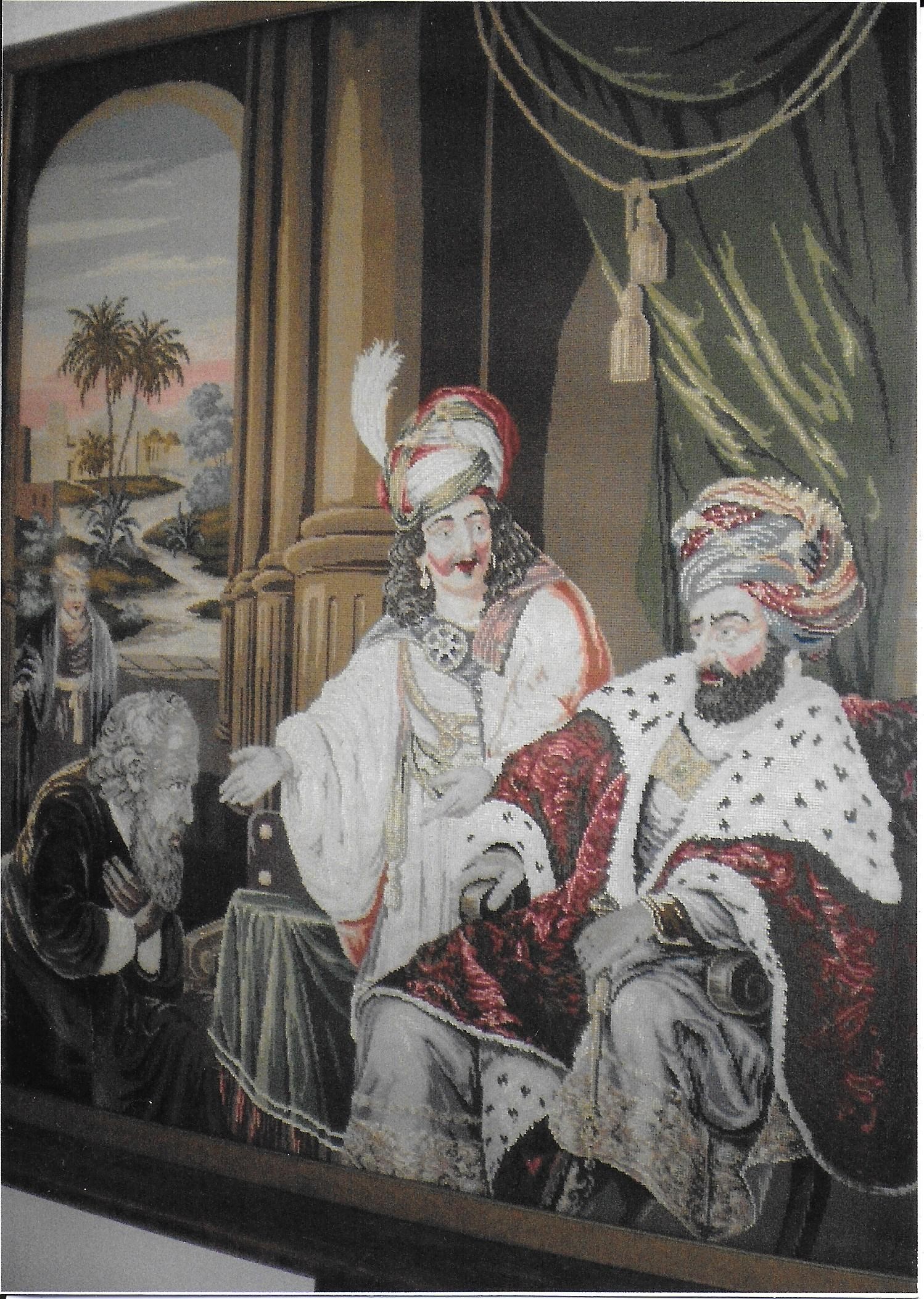
Not your average heirloom_Shersca Genealogy_Tapestry_Joseph presenting his Father to Pharaoh
My family tapestry: Joseph presenting his Father to Pharaoh.

In one of my recent posts, I spoke about an Australian relative who made contact with me. I discovered that she had a tapestry in her family that had been passed down through the generations to her. This was quite a discovery, because there is also a tapestry in my family that had been passed down through my maternal grandfather and his mother’s family. After some digging around, I found that the subject of our tapestry is ‘Joseph presenting his father to Pharaoh.’ A further discovery was the will of the ancestor who made the tapestries. I found this in the research that my great-aunt did, all those years ago.

This will was made by Mary Ann Peirce (neé Symons), who died on 04 April 1915, in Bridgwater, Somerset (England). She was the daughter of William Symons of the brick makers, Colthurst and Symons. Her husband William Elstone Peirce was the brickyard manager for the company’s yard in Burnham on Sea. Mary’s will contains some details regarding money and property, but the most interesting thing is the part that sets out the process for dividing her ‘needlework pictures.’ So technically, what I have inherited is not a tapestry in the classical sense of the word as it was not made using a loom. We have always just called it a tapestry.

...or seven!

It turns out that not only did Mary produce my family 'tapestry' and the one in the family of my Australian relative, but she produced seven pictures altogether! She left one to each of her children. The will names them as follows: ‘Weighing the Deer,’ ‘Boaz and Ruth,’ ‘Robert Burns and the Highland Girl,’ ‘Leah and Rachel,’ ‘Pilate washing his hands,’ ‘Joseph being sold to the Ishaelmites [Ishmaelites],’ and ‘Joseph presenting his Father to Pharaoh.’ I cannot say what the dimensions for all of these pictures are, but they are described as being ‘large.’ The amount of work that went into them must have been staggering. There is a family legend in my branch of the family, that says that Mary was helped by one or more of her daughters. We may never know whether that was true, or whether Mary made them all herself. Whatever happened, I count myself incredibly lucky to have an heirloom like that in the family.

Now, as the will says, these pictures are certainly not small! I remember ours hanging in my grandparent’s lounge when I was younger. It was almost floor to ceiling and took up a quarter of one wall. So what do you do with something like that? Currently, it’s with my aunt as hers is the only house which has the space. I’m not entirely sure that she is joking when she says that she is putting it in her will that either me or one of my two cousins must have it.

Textile preservation

Another consideration is how to keep my heirloom in good condition. I’m no conservationist, but sitting it in full sunlight would be no good at all. Then there is humidity, damp and the danger of it being set upon by creatures. The National Archives (NARA) in Washington, D.C., has an interesting post on their website about the maintenance of antique textiles. It was written a few years ago now, but does advise on the major issues for textiles: light, temperature, humidity, insects. There is also some advice on handling, storage, displaying and cleaning.

My family 'tapestry' is in the best place we can find, somewhere cool, not damp and relatively dark. In the future, we may have to think about how to store it if there is no wall to put it on. I think I will take the article’s advice though, and not clean the piece of work. Right now it is not strictly necessary and it might do more harm than good (unless in the hands of a professional).

And some other things...

The Lily

Not your average heirloom_Shersca Genealogy_Plant, Lily
The Lily that came from a cutting of a plant in my
ancestor's home, at Burnham on Sea.

So what else have I found hiding in the items I have collected? There are a few more heirlooms that come from Mary Ann Peirce’s branch of the family. I mentioned that her husband was the manager of the Colthurst and Symons brickyard in Burnham on Sea. Mary’s family lived in what was likely the brickyard manager’s house for at least 100 years. A cousin of my mum’s remembers visiting the house when she was a child and the house is still standing now. This same cousin gave my mum a cutting of a lily a few years ago. It turns out that this lily came from a cutting taken from a lily that used to grow in the house at Burnham on Sea. Not a conventional heirloom, but what is essentially the same plant now grows in my mum’s garden.

The Tile

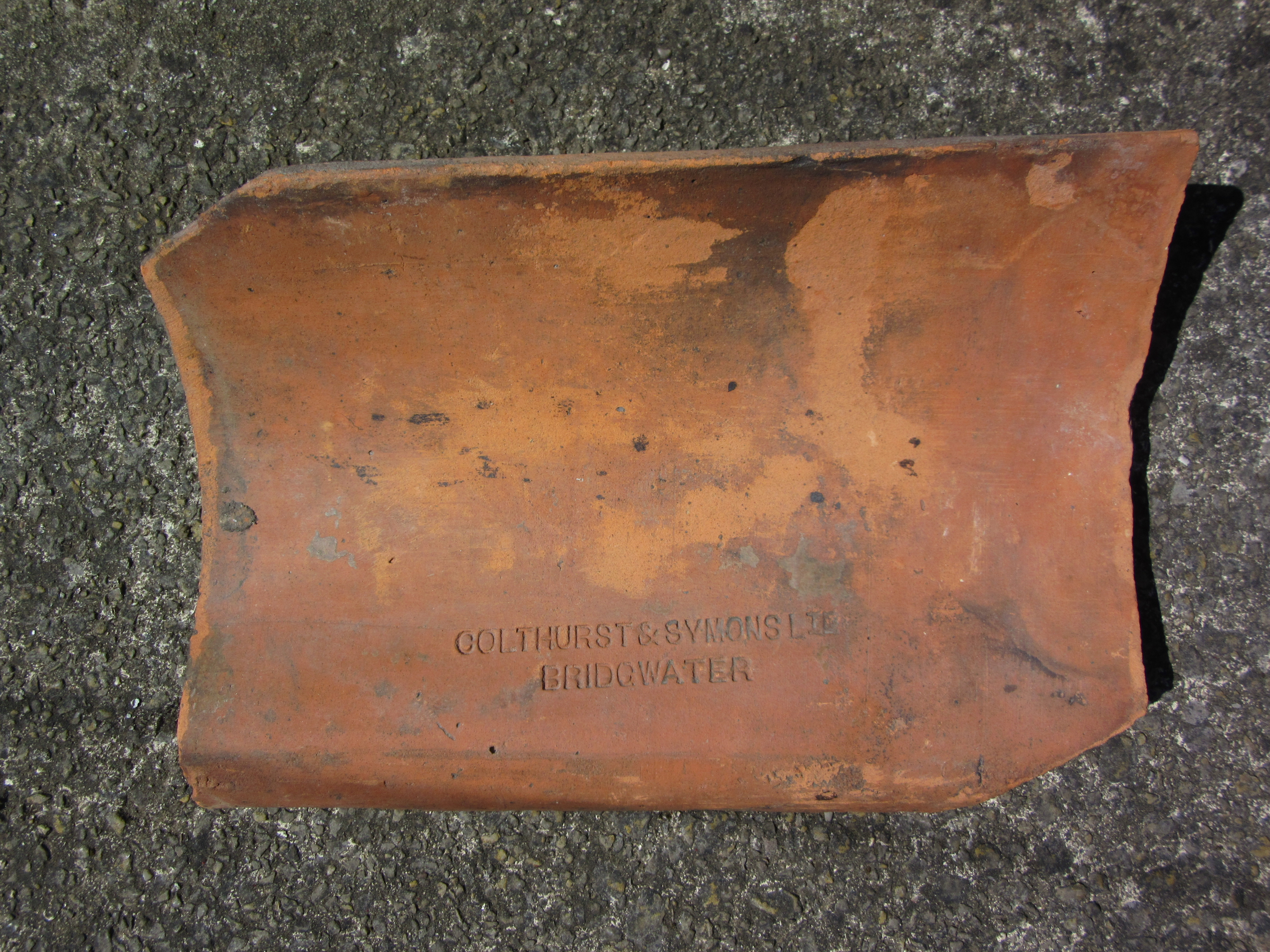
Not your average heirloom_Shersca Genealogy_Colthurst & Symons roof tile
Colthurst & Symons roof tile which was generously given
 to me by the speaker of a talk about the same subject.

Talking of brick and tile making, I went to a talk hosted by the North Sedgemoor Local History Group a few years ago. At the time, I was doing a bit of research into the family’s house in Burnham on Sea and the group presented a complete talk about brick and tile making in the area. The talk was incredibly interesting and gave me a lot of background on the industry. There were even some former employees present. I happened to mention to the speaker that I was a descendant of the Symons family and he presented me with a roof tile that had been made by the company. Whilst not strictly speaking a family heirloom, that roof tile was made by the company that had been owned by my ancestors.

The Veil

Not your average heirloom_Shersca Genealogy_Wedding veil
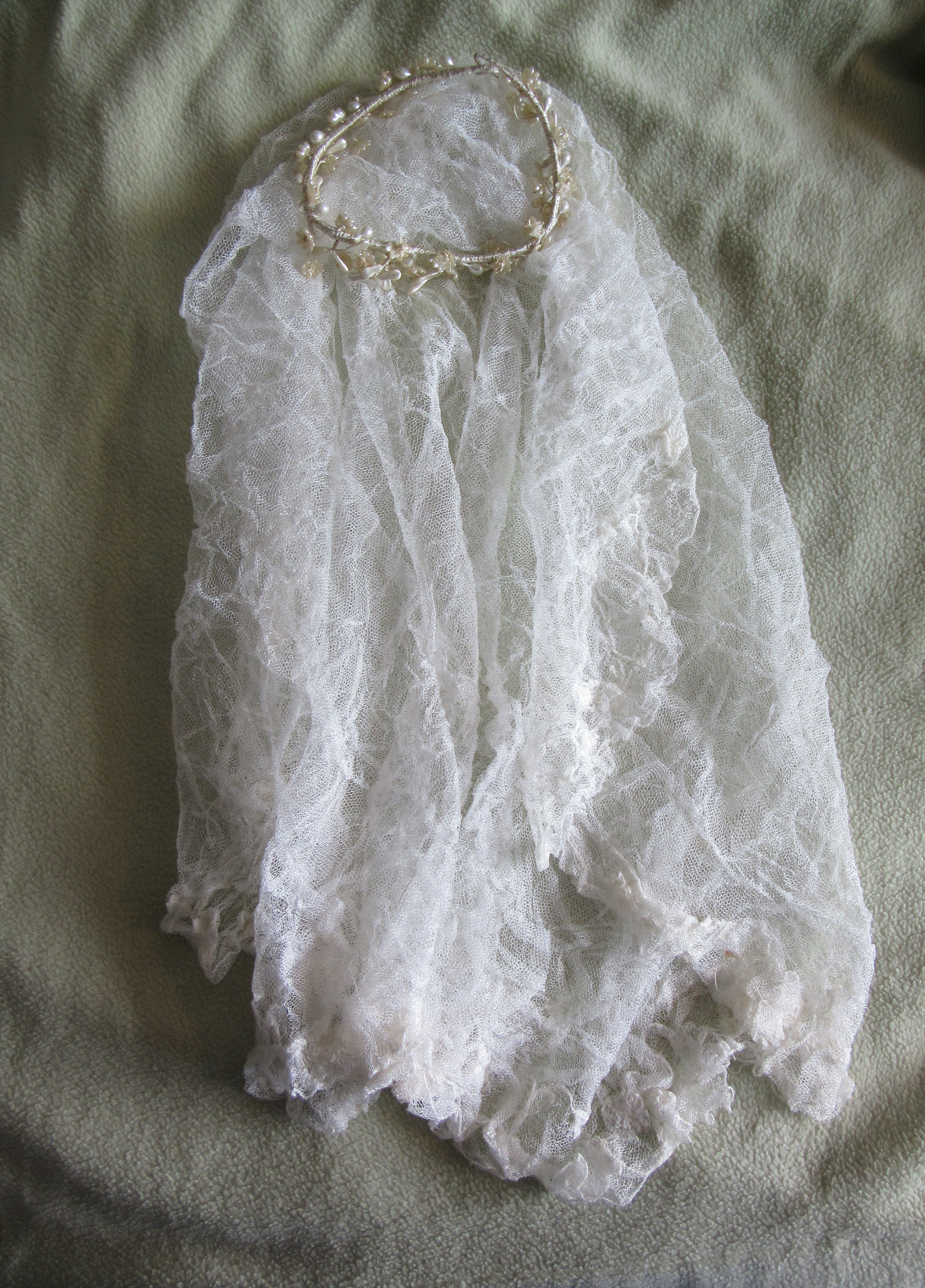
My paternal grandmother's veil, from her double wedding in 1960.

There is one other more unusual family heirloom that I have inherited. This one comes from the paternal side of my family. My dad never knew a great deal about his heritage, beyond his own grandparents or people within living memory. My family history journey has become his journey too. So it is wonderful to have an heirloom from his family, although it is not one that he would wear! I say this because the heirloom in question is his mother’s veil from her wedding. My grandmother had a joint wedding with her sister in 1960, of which I have a few photos. The veil itself is obviously quite delicate, so I don’t think I would ever be wearing it, but it is a lovely thing to have. At least I can follow similar guidance for storing it as with the tapestry.

Some of these heirlooms I had completely forgotten about until I was really thinking about what I had inherited from my ancestors. Sometimes they just become part of the furniture and you forget that they have a story to tell too.

So what unusual heirlooms do you have hiding at home?

Copyright © 2020 Shersca Genealogy

Monday, May 18, 2020

Genealogy in the age of coronavirus- Part 4, Family Photographs.


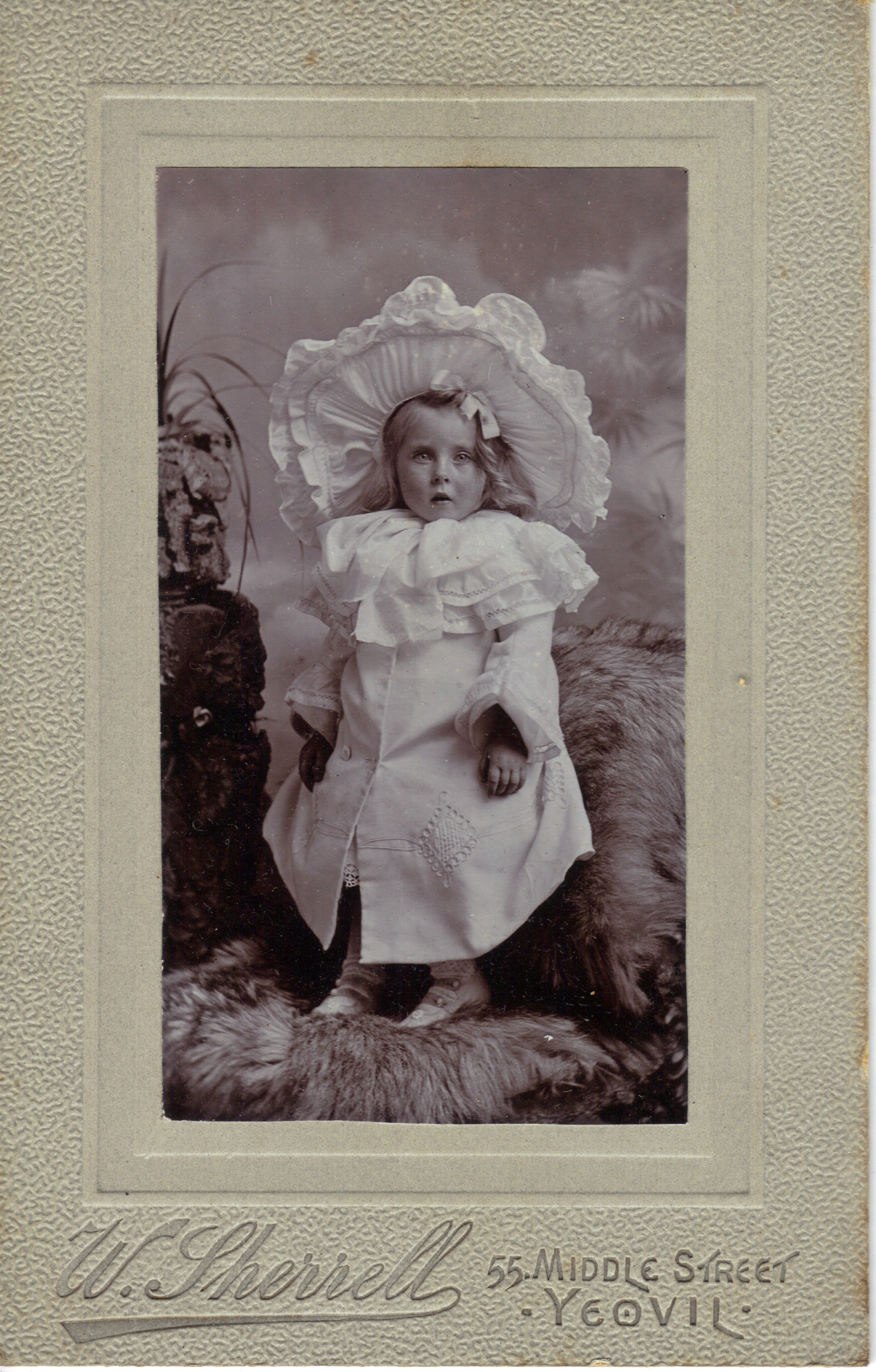
Genealogy in the age of coronavirus, Part 4_Shersca Genealogy_Unknown child_F&L album
An unknown child from Fanny and Lizzie's photo album,
taken in Yeovil. I don't know the child's identity, but I
love the outfit!

I have finally reached the final post in my series about genealogy in the age of coronavirus. So far, I have covered interviewing relatives and organising your research, some interesting online resources and sharing your research and writing your own history. In this final post, I will talk about a large group of the documents we inherit: family photographs.

Who is that?

I don’t know about you, but I have acquired a lot of photos. My mum is always photographing things wherever she goes, so we have many albums of family holidays and other events at home. Then there are my own photos and ones I have inherited from other family members. Photographs are an excellent way of documenting our lives, but there is often a problem. I’m sure you know the one I mean. Some of the photos you inherited have no name, no date and no place attached! When my grandmother passed away, I spent some time at my Aunt’s house scanning and sorting through various photos and documents.

I came across a wonderfully full photo album which had belonged to my gran’s spinster aunts, Fanny and Lizzie. The downside was that a large proportion of the photos it contained were completely unlabelled. Not even a name, let alone a date or a place. Now, there is no-one left who knows who these people are. This is a very common problem for genealogists and family historians and sometimes we have to accept that we may never identify who is in the photograph that we are looking at. Properly labelling my own and my family’s photographs is something that is near the top of my project list. It could take some time though, especially because of the number of photos that my mum takes!

What else can we learn?

Just because we may never be able to put a name to a photograph, doesn’t mean that we can’t learn other things instead. There are various books and authors that talk about how to distinguish different clothing fashions from different eras. A good book for family historians is Tracing Your Ancestors Through Family Photographs by Jayne Shrimpton. It is very comprehensive and talks about other things apart from fashion. There can be clues in the location of a photograph, the photographer, the type of photograph and many other things. The book even contains a section about inherited photo albums and clues that may be found in something as simple as the layout and order of the photographs themselves. That is certainly a section I need to revisit for Fanny and Lizzie’s album.
There are some other routes you can take to help identify your photographs. In a previous post, I wrote about using a Google Image search to help to identity mystery photographs. You can find that here, but I concluded that it may not be 100% successful. It depends on either people sharing photos from your family, having a famous relative and photos that match being on the internet in the first place. Still, you never know when your luck might be in.

Genealogy in the age of coronavirus, Part 4_Shersca Genealogy_Sarah Hawker
Sarah Cole (neé Hawker) in her later years. This
is part of a group photo and may have been
taken at the wedding of one of her sons.


Compare-a-face

A fun application that may (or may not) help you identify who is in a photograph, is the ‘Compare-a-face’ service from FamilySearch. I recently stumbled upon this and have found it fun to compare my own photo to those of some of my ancestors. I have always thought that I get the shape of my face from my great-great-grandmother, Sarah Hawker (you can read more about her here) and her mother Mary Ann Rowsell. According to the service, there is only a 48% resemblance between me and Sarah. This did change depending on the photo of me that I used. One comparison raised that to 51%. I only looked 38% like my maternal grandmother and 51% and 45% like my dad and my mum, respectively. I don’t know who the other 4% belongs to!

With the changing percentages, this is not something that I would rely upon as being totally accurate. I’m sure that the accuracy depends on whatever algorithm is used to determine likeness. I haven’t been able to find anything on the FamilySearch website so far that explains how this works. Still, it is an amusing way to pass the time, especially with the amount of time we are spending at home.

Picture My Heritage

This also goes for another FamilySearch service, ‘Picture My Heritage.’ In this application, you take a photograph using your device camera and it is then superimposed upon a picture of someone in the national dress of your choice. For me, the website picked up that my surname was most common in England, Wales, America and Canada. These were the top choices for my solo ‘historical picture.’ The finished picture then adds in facts about the place you have chosen. You can also picture yourself in a variety of historic group pictures. The website asks you to choose a face and then the process is the same as with the individual photos. Some of the photographs you can choose from look suspiciously modern, just taken in black and white! Both of these sources are free, but you do need a FamilySearch account to access them.

MyHeritage 'In Color'

Genealogy in the age of coronavirus, Part 4_Shersca Genealogy_Unknown man_F&L album
An unknown man from Fanny and Lizzie's
album, this time taken in Brecon.
I wonder what this would look like in colour?

A final online source which might be of interest to those with black and white photographs, is the MyHeritage In Color service. You do have to register for an account and it seems there are a limited number of photos that you can colourise for free. But you can upload black and white photographs and the service will put them into colour for you. Do read the FAQs, as they do say that it is all done by algorithm and the colours may not all be authentic. The examples they give are very varied, from all countries and backgrounds. The before and after shots clearly show the difference and give an idea of how your ancestors would have seen the scenes represented.


Remember, with all online services you may need to think carefully before you upload any photographs. Read any terms and conditions, especially if you are unhappy about others accessing your own family photographs.

There is much more that can be said about family photographs. One aspect I haven’t been able to include here, is storage and preserving them for years to come. That is a whole other topic for another post!

For the time being though, enjoy the family photos that you have. They are certainly another project to add to my growing list….

Copyright © 2020 Shersca Genealogy
Monday, May 4, 2020

Genealogy in the age of coronavirus- Part 3, What do I do next?

Welcome to the third post of my genealogy and coronavirus series. Today’s topic considers what to do with all of the information we have gathered in our research and how we can share it with other people. As genealogists and family historians, our main focus is on the research we do. We love finding out new things about our ancestors and filling in their stories. Something we may not consider is what to do with all of the discoveries we make and sharing our research with others. How do we preserve our research for the future?

Writing a family history

These days, there are many different ways of sharing our research and a lot of these can be online or at least begun whilst at home:
  • Articles
  • Blog posts
  • Family history websites
  • Mini biographies
  • Family history book
The one you choose does depend on what your overall aim would be and how comfortable you are writing. Each type may lend itself to a different style of writing. If you would like to share your research with the genealogical community and are hoping to be published, then an article might be the right choice. For a slightly more informal medium, perhaps a blog post would be more suitable. If you want to share your research with others who may be unknown relatives, then a website dedicated to a specific family name might be best. Some find that writing a full manuscript is the best way to record all of their research to date. You would need to assess how much time you have, what your end goal for writing is and also how comfortable you are with writing. A useful source that I have found is the book “Writing your family History” by Gill Blanchard. It gives a lot of advice from length and scope of your writing, to how to set about writing in the first place. There are of course, many other articles and books that give advice, some which can be found online. One that has some interesting writing tips is an entry in the FamilySearch blog from a of couple years ago.

Sharing family trees

Genealogy in the age of coronavirus, Part 3_Shersca Genealogy_Family tapestry
My tapestry family heirloom: "Joseph presenting his father to Pharaoh."

Of course, if you are not looking to draw your research into a narrative, there are ways of sharing family trees only. Companies like Ancestry, FindMyPast, FamilySearch (and others) have facilities to share family trees online. I personally have used Ancestry in the past and have shared my tree both with current Ancestry members and other relatives through email. I have found relatives all the way across the world in Australia. The stories that have been passed down to them add extra information to the stories passed down to me. One of my Australian relatives then sent me a photograph of a tapestry that was passed down through her branch of the family. My branch also has a tapestry (of a different subject) that was made by the same ancestor as the Australian tapestry.

Something to consider with websites like these, is the level of privacy and security you get. It is a well-known fact that Ancestry allows members to elect to have a public or private tree. Bear in mind though, that according to the Ancestry terms and conditions, anything you post that is public on the website is automatically available for anyone to see and to use. Reading the terms and conditions of these sites is always a good idea, especially if you are intending to share family information. If you don’t agree, choose a different way to share. I never use an online based service for my clients. Instead I use an offline program. There are various computer programs now that can create and manage family trees. They can even produce an output that is easily transferable through email or printing and can be shared with other family members. Each one is different, so read any instructions or help articles if you have one already. If you don’t, have a good look at the ones available and choose the one that suits your family history needs best.

Write you own history


Something that we also forget when researching, is that we, ourselves, hold valuable information. How often have you wondered about the everyday things in an ancestor’s life- the little things that never make it into the records? The further back you go, the more difficult (sometimes impossible) it is to find that kind of information. I will never know whether some of my ancestors had pets or who their best friend was, or what hobbies they had (if they had time). When people move out of living memory, these everyday things that make us who we are, can vanish.

But we can help future generations to remember us in this way, where our ancestors haven’t been able to. Recently, I have started writing a mini-autobiography of my life so far. Not only will this give a fuller account of the everyday things for future generations, but it is a good task for when we are all needing to stay at home. It is to some extent, an extension of interviewing relatives (have a look at my first post in this series). The only difference is that you need to ask yourself questions. I mentioned when I wrote about interviewing relatives, that people find it easier to talk when they have something to focus on first. It is exactly the same if you think about writing your own story. Think about what you consider important- what would you want future generations to know about you? At the same time, you don’t necessarily have to include everything, down to the time you went to the dentist last week. Perhaps you might like to include pets, friends, schools and events that had a particular impact on your life.

As with interviewing relatives though, be aware that some things may be difficult to put down. Don’t push yourself, perhaps you might be able to come back to some things later on in your life. Although this is a good time for this kind of activity, many of us don’t have as much support as we usually would. So take care if you think you might touch upon anything that could have a detrimental impact right now. An extension of this idea would be to document life as it is right now, so that generations to come could get an idea of how their ancestor’s lives were impacted during the COVID-19 crisis. What things have changed from the way life usually progresses?

The children are the future

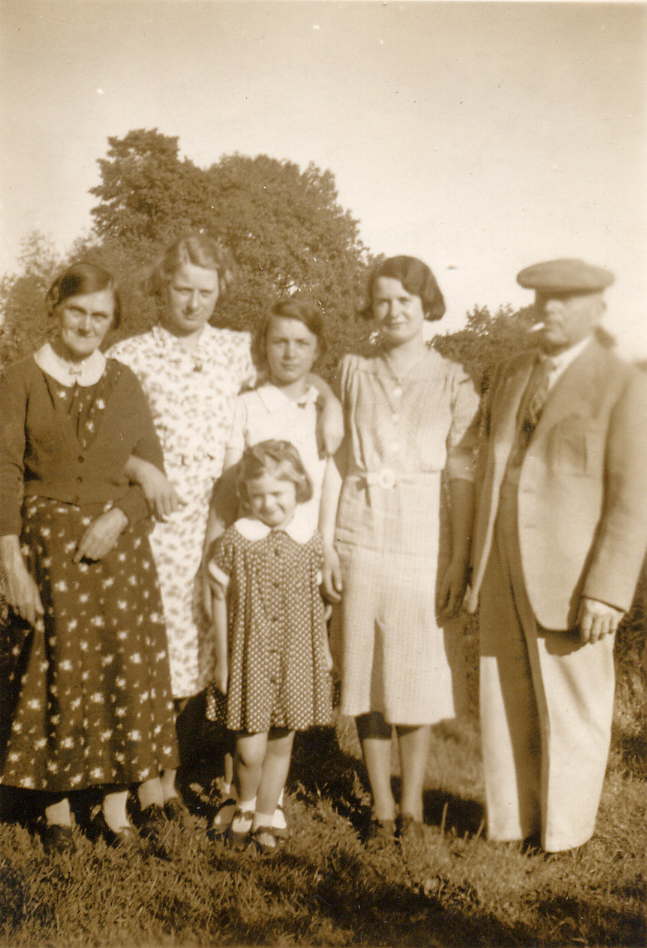
Genealogy in the age of coronavirus, Part 3_Shersca Genealogy_Family photograph
Photograph of family members who I wish I had learnt more about as a child.

Spending more time at home for some, means planning activities for their children too. Perhaps we don’t talk about involving children and young people in genealogy as much as we should. They will be the ones who remember us. The number of times I and even my parents, have wished we had the interest as children to ask relatives about their lives, is quite large. It seems to be quite common that people unfortunately only become interested, after the people with the answers are no longer with us. See another previous post for an interesting idea of how to involve children in genealogy. There are also various other blog posts and articles around at the moment which give some ideas about how to introduce children to genealogy and family history. You can find an good one on this topic here. It was written by a fellow genealogist and contains some thought-provoking ideas. Family Tree Magazine also has an interesting post with some further thoughts.

So, whether you decide to write your autobiography, your whole family history, or just share your family tree with relatives, now is a good time to do it. Even though we may not be sharing our research in person at the moment, the wonders of modern technology mean that we are at least still able to.

Copyright © 2020 Shersca Genealogy
Wednesday, April 22, 2020

Genealogy in the age of coronavirus- Part 2, Online resources.

Following on from my last post (Genealogy in the age of coronavirus- Part 1, Interviewing relatives and more…), this week I am talking about researching your family history online. Whilst staying at home, online resources are something that we can easily explore.
When I was researching material for this post, it became very clear that I could be writing about online resources for weeks! There are so many, relating to many different areas of genealogy and family history. If there is a topic you are interested in, there is likely an online resource to match. So instead of trying to fit everything in, I want to share with you some online resources that I have found interesting.

The Commercial sites

For those who are just starting out or are family history veterans, websites like Ancestry, FindMyPast and FamilySearch might already be familiar. They hold large collections of records, from Census and Baptism records to newspapers, military and passenger lists. If you have subscriptions to sites like Ancestry, FindMyPast or TheGenealogist and MyHeritage, now is a great time to familiarise yourself with what they actually do have. You never know when you might find a really useful record set that you didn’t know about before. These websites are also constantly updating their collections. In my own family tree research, I have discovered that Ancestry holds Somerset (England) Baptisms, Marriages and Burials. But if I want to look at Baptisms, Marriages and Burials for Radnorshire (for my Welsh side), I have to go to FindMyPast. It is definitely worth getting to know which sites hold the records you need.
Genealogy in the age of coronavirus, Part 2_Shersca Genealogy_FamilySearch Wiki
View of the FamilySearch Research Wiki home page.

FamilySearch by comparison, is a free resource. It also holds much more than you might think. Not only can you search various UK and World records, but their Research Wiki page is incredibly useful. If you are unsure of what records can be accessed in a particular area (especially online), the Research Wiki can help. Some time ago, I was researching some Welsh ancestors who had travelled to Pennsylvania (USA) and later returned to Wales. FamilySearch was able to give me a better idea of what records I would be able to find about the family’s time in the USA. The Luzerne County page (which has been updated since I last used it), told me all sorts of useful information. For example, I discovered that I would not be able to find a record of Civil Births for my family’s children as they were born before Civil Registration began in the county (1893).


Another reason for exploring FamilySearch, is the records that have been digitised but not yet indexed. To find them, look under ‘Records’ and click on a specific area of the world and they should be under ‘Image-only Historical Records.’ In situations like the current one (when we have more time than usual), it might be worth having a look to see what can’t be found on other sites like Ancestry and FindMyPast. Having said that, FindMyPast have a similar facility for some of their records. So have a look there too. It might take some time (as it means scrolling through each page of a record), but you never know what you might find.

What else can I find?

Maps

So what other online resources are there? Well, that depends on what you are looking for. To give your research some context, how about map resources? The National Library of Scotland holds many different maps online. I recently saw the evolution of where I live, all the way from the 1880s to the 1940s. Tracking the changes over a period of time can give you a sense of how your ancestors would have experienced the area. If you live in or have ancestors from the west of England, then the Know Your Place-West website is very interesting. It covers Somerset, Gloucestershire, Bristol, Devon and Wiltshire. You can see various layers including:
  • Public contributions (e.g. drawings and paintings of local landmarks)
  • Entries from the Historic Environment record
  • Boundaries for local authorities
  • Local history and gazetteer entries
Genealogy in the age of coronavirus, Part 2_Shersca Genealogy_Map example
Example of the kind of map that you might find online.

These layers are overlaid on a map, which shows both a modern and a historical one. You can view them one at a time or side by side. In the area around my road, I can see Second World War air raid shelters marked, an 18th century turnpike and a Roman Road and settlement. Also try Old Maps Online for earlier examples.


Biographical resources

Perhaps you have found an ancestor who was an important person or of a high standing in society? For British genealogists, this is where you should not forget the power of your library card. If you are a member of a library, then you can use your library card to login to the Oxford Dictionary of National Biography website. This allows you to access all of the biographies on the site. I recently found an entry for a client’s ancestor, who was a Victorian surgeon and social reformer. If you have Welsh ancestors, then consider looking at the Dictionary of Welsh Biography. This is completely free to use and allows you to browse by surname or search for a specific person. A lot of non-conformist ministers are included, so it is worth a look if your ancestor was a minister too.

The History of Parliament Online website can also be useful if an ancestor was a Member of Parliament. Not all periods are available yet, but you can get some biographical details and information about their time in Parliament. I will be writing more about this resource and how it has helped me in my own research soon!

The good news about the biographical sources above, is that they show full references. This allows you to go and find the original source of the information. Remember, it is always preferable to see the original where you can. As a researcher, you can also be more confident about the articles you read when they are properly referenced. You know that the author has been diligent in their research.

Let's explore...

Another thing to think about when researching remotely right now, is any special access organisations might be giving because of the circumstances. The National Archives in Kew are working on giving free access to their online records. The British Newspaper Archive has a special offer on right now too (useful if you don’t have a FindMyPast subscription). Explore what your local library has to offer, whether that is e-books, audio books or magazines. TheGenealogist is offering a three month free starter package on their website and some local archives and family history societies already offer some records freely. Check out your local societies (or ones local to your ancestors) to see what they already have.

...and have some fun!

Finally, a fun website I have found is www.drawshield.net. The website offers resources to help you learn about heraldry and I have used it to help identity coats of arms from blazons I’ve already found (drawing them is not my strong point!). But the fun bit is the facility to create your own shield. It gives you the option to create one from the various parts that can be used in blazoning. The good news is that you don’t have to be an expert because the site shows examples of each part when you choose them. The possibilities are endless and it’s a fun activity- perhaps a way to get your children interested. As the website cautions though, using a heraldic device is often restricted by many countries and there can be copyright considerations too.

I hope you have some fun exploring what the internet has to offer. If you are looking for something specific, then many of the family history magazines have guides to good websites. Don’t forget that places like The National Archives (Kew) also have some very useful research guides on their websites. They contain a wealth of information about lots of different family history topics.

NB: All information correct at time of writing (Apr 2020).

Copyright © 2020 Shersca Genealogy
Monday, April 6, 2020

Genealogy in the Age of coronavirus, Part 1: Interviewing Relatives and more...

With the UK now in lock-down due to the coronavirus pandemic, you might ask yourself where does that leave genealogy? Is it still possible to carry on when you need to stay at home? The answer is most definitely, yes, there are still plenty of things you can do for your family history without leaving your house.

Interviewing relatives

If you are starting from the beginning and only just embarking on your family history journey, the best place to start is always talking to your relatives. Thanks to modern technology, this is something that is still easy to do in times like these. We have the option of telephoning, or using various online forms of communication (like Skype) to keep in touch with our relatives. There is a form of communication for those who prefer technology and those who do not. Speaking to our family members not only helps our genealogical research, but when we are unable to meet people in person, it helps both our relatives and us to feel connected still.
On the face of it, asking relatives about our family history seems quite easy. Get in touch, ask questions and find out things you didn’t know. But, if you want to get the most out of your conversations there are a few things to think about first:
  1. Draw a family tree of what you know
  2. Make a list of questions you would like to know the answer to
  3. Have some photographs or other items on hand to use as memory prompts
It is useful to have a family tree on hand, so that you can a) easily add any family members your relative mentions that you didn’t know about and b) so that you can easily work out the relationships of anyone that your relative does mention. Your relative may refer to someone with a nickname and not their full name and vice versa. With a family tree on hand, you can more easily pinpoint who is being discussed.

In order to guide the conversation with your relative, having questions ready can be very helpful. If you asked me to talk about my family history, I would find it much easier if you started with questions like ‘where were you born?’ or ‘what is your earliest childhood memory?’ (incidentally, it’s playing Pooh-Sticks on the bridge with my dad near our old house). If you need some inspiration for questions, here is a useful blog post that has all sorts of questions that you could ask relatives. Sometimes, one question will open the door to a whole host of recollections. Be aware though, there may be things your relatives won’t want to talk about. There might be things that they feel are too painful, or embarrassing. Views about things such as illegitimacy, mental health and a whole host of other issues may have been very different when your relative was younger. I would not push a relative to divulge a piece of family history if they were uncomfortable doing so. They may change their mind at a later date, or you may have to come to terms with the fact that the specific issue remains a mystery. Or, things may come to light with further research.
Genealogy in the age of coronavirus, Part 1_Shersca Genealogy_2
Example of a photograph that could be used as a prompt.

Photographs can make excellent conversation starters. Seeing a specific person or place may remind a relative of a particular event or family story. There is a lot more you can get from photographs, which will form the subject of a later post.

Don’t forget that talking to relatives isn’t just for the beginner to family history research. A person is unlikely to remember even a small part of what they know in one sitting. So, if you are at home and want to let your relatives know that you care about them, contact them. You might find out some other family information at the same time.

What else can I do?


There are some other things you can do at home too. A little while ago, I was given some documents and research that had belonged to my great-aunt. Sorting through that would be a good project at the moment. If you have any papers, certificates or assorted family history documents at home with you, sorting through them is a good idea whilst you’re staying in. Sorting your family history documents into easy to use folders and categories is always a good idea. This can go for those of us who are a bit further down the line too. I know life sometimes gets in the way for me and I get out of the habit of filing my own family’s research. This goes for digital documents too. Having a system where you can locate things easily is so helpful in the long run. Just think about the people who might one day inherit your research. They will find it so much easier too. How you choose to file documents (either physical or digital) is up to you.

Different approaches


There are many approaches you can take when storing your documents and it depends on what works for you. I tend to store my physical documents by surname, then by generation, then by date. For example, starting with the Lloyd line, I have the birth, marriage and death certificates for my great-grandfather Philip James Lloyd. Then follows the marriage certificate of his parents Thomas Lloyd and Elizabeth Ellen Price from 1901, then the marriage certificate for Thomas’ parents Philip Lloyd and Ann Thomas from 1874 and so on. The birth and death certificates after Philip James Lloyd are all digital. They are filed by surname, then by type of event (birth or death) and are all named and dated. I have even scanned the physical certificates, so that I have a digital copy, should anything happen to the originals.
Genealogy in the age of coronavirus, Part 1_Shersca Genealogy_1
Example of some family history folders.

How to file documents for the women in our families can be a bit trickier, due to surname changes after marriage. Do you file them under their husband’s surname or under their maiden name? I take the middle ground and file any documents pre-marriage under their maiden name and any post-marriage under their husband’s surname. This is why Philip James Lloyd’s wife Gwendoline is filed under Jenkins for her birth certificate in 1909, but under Lloyd for her death certificate in 1972. For a brief guide to storage and handling of documents, have a look at this post from FamilySearch.org.

Family history books


One final thing that I am sure all genealogists and family historians can do while they are staying indoors, is read. If you are anything like me, then your books about genealogy and family history seem to breed. The next time you look, you have acquired some more without realising it! This is an excellent time to catch up on your reading. Not only is it another activity to do, but you might just gain some knowledge that you didn’t have before. This makes us better researchers. If you are starting out and haven’t amassed a library of books yet, don’t worry there is still time. If you have a little money to spare right now, then publishers such as Pen & Sword produce many books to do with different aspects of family history. They also sell copies as eBooks, which is particularly helpful right now.

So don’t despair, there is still plenty you can do. Look out for my next post, which will talk more about other things you can do at home.


Copyright © 2020 Shersca Genealogy